Construction · Interior
Natural stone products: Yandex.Direct for the premium segment
Launched PPC advertising for a premium natural stone manufacturer: set up analytics, segmented campaigns by product lines and optimised lead quality.
- Industry
- Construction · Interior
- Duration
- 1.5 months
- Services provided
- Yandex.Direct, Call tracking, Yandex.Metrica, SEO
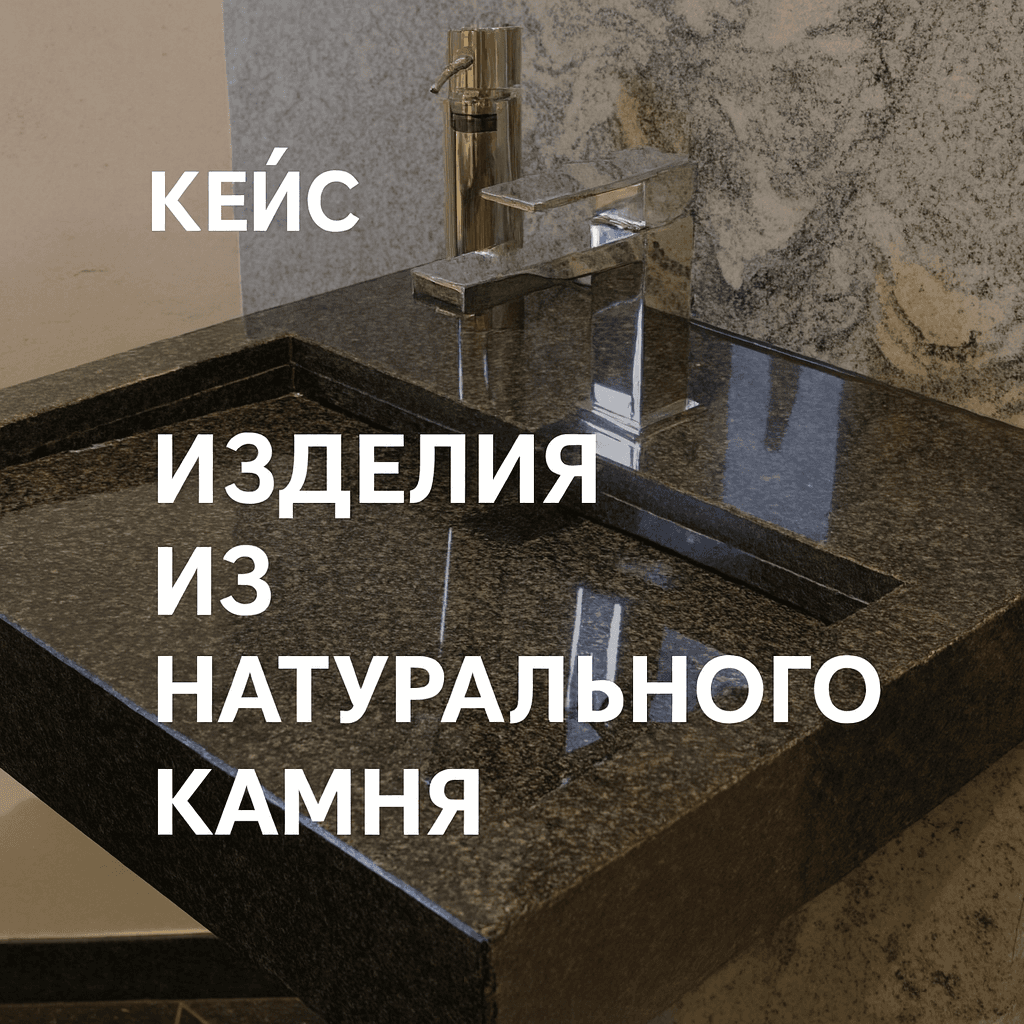
A client approached me who supplies and manufactures premium natural and engineered stone products — countertops, window sills, kerbs, tiles and facade elements. Geography: Russian Federation.
The first inquiry came in the summer of 2023, but the client held off on full campaign management due to budget. He returned in February 2024 after an unsuccessful experience with other contractors: there had been no reporting and spend was non-transparent.
Before launching any ads I immediately audited the website. It was SEO-oriented but contained no conversion elements and no unique selling points. I provided recommendations for improving landing pages, and the client implemented them. This step proved critical for subsequent results.
Project goal
Reduce the cost per lead to 2,500 $ while maintaining lead volume and quality.
Stage 1. Analytics setup and inquiry tracking
First I tagged all inquiry forms and connected Yandex.Metrica.
To track calls I integrated call tracking — now I could see exactly which campaign and which keyword generated each call. This enabled prompt strategy adjustments and improved ad efficiency.
Stage 2. Testing automatic "Master Campaigns"
I launched three types of automatic campaigns with a "Pay per conversion" strategy — where budget is charged only when a lead is submitted:
- Based on site content
- Targeting high-frequency keywords
- Targeting competitor sites and interests (construction, renovation, interior, procurement, tiles, furniture, etc.)
This model is optimal for display networks — it filters out non-targeted clicks and concentrates on hot audiences.
In parallel I launched retargeting: ads followed up with users who had visited the site but had not submitted an inquiry.
Stage 3. Search campaigns
Launching search campaigns required a more refined structure. I divided queries by product line:
- Stone countertops
- Window sills
- Kerbs and tiles
- Facade cladding
- Steps and paving stones
- Brand queries
- Generic phrases without material specification
Hot-query campaigns ran on a cost-per-click model, while broader ones used cost-per-conversion to protect the budget and attract the most targeted inquiries.
Stage 4. YAN, feeds and the Unified Performance Campaign
To expand reach I launched a Yandex Advertising Network (YAN) campaign across all keyword phrases using a "Pay per conversion" strategy.
I also used feed-based campaigns: smart banners in the network, dynamic ads in search and product gallery ads.
To boost results further I added a Unified Performance Campaign — a format that combines graphical, text-and-image, dynamic and product ads. This allowed me to show users the most relevant ads at different stages of the funnel.
Stage 5. Cost-per-lead optimisation
The most active direction was stone countertops, but the initial lead cost was around 3,100 $.
I calculated that to reach the target price of 2,500 $ the site's conversion rate needed to rise from 5% to 6.6%.
The client received detailed UX and conversion element recommendations, but implementation took time. In parallel I strengthened the Window Sills and Flooring directions, where the cost per inquiry stabilised at 1,000–1,500 $.
Stage 6. Lead quality work
Analysis revealed that nearly half of leads never converted to sales — users considered the products too expensive. I adjusted my approach:
- Paused phrases tied to "price", "cost", "cheap"
- Added premium-quality messaging to ads
- Set audience affordability adjustments (impressions only to the top 10% most financially capable users)
- Recommended the client publish examples of finished products with final prices on the site, so non-target users would self-select out
Stage 7. Additional lead sources
The site actively used additional contact channels — WhatsApp and email.
I set up tracking for click-throughs and introduced a new "copy email" goal, which allowed me to record a real intent to write. This helped assess the effectiveness of each source more accurately and understand which inquiries were coming from ads.
Results
Over 1.5 months of work in 2024: spend — 120,606 $, leads — 34, average cost per inquiry — 3,547 $.

Summary and next steps
The cost per lead is still above target, but the quality of inquiries matches the premium segment. Plans include a strategic call with the client and an SEO specialist to agree on site changes and increase conversions.
The client has no in-house marketer, so I took on part of the marketing analysis and positioning work, as well as SEO optimisation.
Conclusion
The results of this case show: the effectiveness of contextual advertising depends directly on the quality of the website and the client's involvement. Campaign setup is only half the work.
When the PPC specialist also acts as a marketer and the client becomes an active participant, advertising becomes a reliable sales channel — even in niches with a narrow target audience.
34
leads in 1.5 months
3 547 $
average cost per lead